


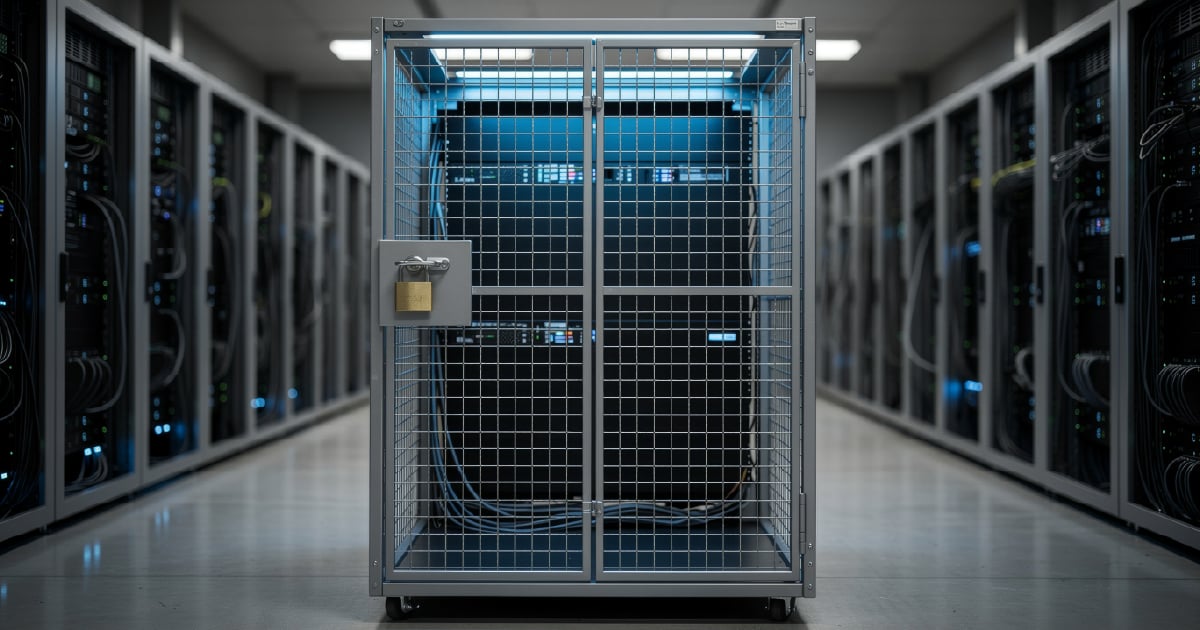
Large enterprises and federal organizations operating air-gapped environments face unique security challenges. While keeping mission-critical systems disconnected from the internet reduces exposure, it also makes keeping systems updated much more difficult. Network isolation means that systems will remain unpatched for extended periods, leaving organizations vulnerable to known issues and preventing them from taking advantage of important improvements.
To address this challenge, Adaptiva introduced AirGap for OneSite Patch, which enables organizations the ability to securely deliver patches to fully isolated environments while preserving the strict security controls those environments require.
Read on for a Q&A with Adaptiva CEO Deepak Kumar on AirGap, the challenges it addresses, and how it benefits government organizations and their IT and security teams.
What is AirGap for OneSite Patch?
Deepak Kumar: The simplest way to think about AirGap is that it brings modern patch management to systems that can't connect to the internet.
A lot of government agencies, critical infrastructure operators, and other organizations intentionally keep their most sensitive systems isolated. That's good for security, but those systems still need to be patched. And the problem is that most patch management tools were built for connected networks.
AirGap solves that by securely moving only the information needed to identify required updates outside the isolated environment. The approved patches are then transferred back using the organization's existing security procedures, and OneSite Patch handles deployment using the same workflows IT teams already know. It makes patching air-gapped systems far more efficient without changing how those environments are secured.
Why is Adaptiva launching this capability now?
Deepak Kumar: The need for secure offline patching isn't new, but customer demand has reached a point where it became a clear priority.
Over the past year, we've consistently heard the same question from federal agencies, defense organizations, critical infrastructure providers and large enterprises: "Can OneSite Patch support air-gapped environments?" As we continue expanding our work with highly regulated organizations, particularly those pursuing modern security initiatives, this capability became a natural extension of our platform.
Organizations can no longer accept leaving isolated systems without the updates they need simply because they're disconnected. Whether addressing security vulnerabilities, fixing software issues or delivering improvements, they need a secure way to keep every environment current without compromising the security controls those environments were designed to enforce.
What problem does AirGap solve?
Deepak Kumar: Air-gapped environments have traditionally forced organizations into a difficult tradeoff. They could maintain strict isolation, but keeping systems current became slow, manual or inconsistent. In some cases, systems simply weren't updated as often as they should have been.
This creates challenges beyond security exposure. Delayed updates can also prevent organizations from resolving software issues, maintaining compatibility with other systems or taking advantage of new capabilities.
AirGap removes that tradeoff. Organizations can continue enforcing physical separation from the internet while establishing a repeatable, controlled process for delivering security updates, bug fixes and other software improvements. IT teams don't have to create entirely new operational processes or manage separate patching tools. Instead, they can extend their existing OneSite Patch strategy into their most secure environments.
The result is improved security, greater operational consistency and confidence that critical systems aren't falling behind on the updates they need to remain secure and operational.
How does AirGap work?
Deepak Kumar: The workflow is intentionally simple because security teams already have well-established procedures for moving information across physical security boundaries.
The process begins inside the isolated environment, where OneSite Patch generates a small, human-readable request file identifying the updates that are needed. That file is transferred, using the organization's existing secure process, to an internet-connected OneSite Patch server, which builds a package containing the required patches. The package is then moved back into the secure environment using the organization's existing approval and scanning processes. Once imported, the updates are autonomously deployed using the same automation, maintenance windows and rollback capabilities customers already use with OneSite Patch.
The experience remains familiar for administrators while fitting naturally into existing security and compliance workflows.
What makes AirGap different from other offline patch management solutions?
Deepak Kumar: Simplicity and security were the primary design goals.
One of the biggest differentiators is that the only information leaving the isolated environment is a small, human-readable text file. Security teams can easily inspect it, approve it or, if necessary, even recreate it manually. That significantly reduces complexity compared to approaches that require transferring larger datasets or proprietary formats outside the secure network.
AirGap also builds on the existing OneSite Patch platform rather than introducing a separate management solution. Organizations can manage both connected and air-gapped environments from the same platform while maintaining the workflows, automation and governance they've already established.
For organizations with multiple isolated environments, AirGap also supports managing multiple secure zones from a single online server, making it easier to scale patch management across complex infrastructures without sacrificing security or operational efficiency.
Here’s the takeaway
Air-gapped environments shouldn't become blind spots in an organization's cybersecurity strategy. AirGap for OneSite Patch makes it possible for organizations to extend secure, automated patch management to even their most isolated systems while also preserving the security controls those environments require.
By enabling organizations to deliver security updates, bug fixes and feature improvements across disconnected environments, AirGap helps ensure isolated systems remain secure, reliable and up to date without compromising their operational requirements.
Contact Adaptiva to schedule a demo and learn how OneSite Patch can help simplify secure patch management across both connected and air-gapped environments.